Recently Taiwan held its Golden Melody Awards, which is the Taiwanese equivalent of the Grammies. I have to admit I haven’t been following current popular music in Taiwan closely because I’ve been too busy researching the older stuff. I was familiar with many of the artists and musicians nominated, but there were many I didn’t know as well. I have the albums that several of the aboriginal artists were nominated for, and I’ve heard some of the stuff that was nominated in other categories, but not really enough to pass judgment on most of the awards, though I can recommend the albums by Suming (舒米恩), Ado' Kaliting Pacidal (阿洛.卡力亭.巴奇辣), Sangpuy (桑布伊), Takanow (達卡鬧) and Kao Chou Ching (拷秋勤), though I've only heard a few songs from the latter two's albums. When I have the chance, I will listen to more of the nominated music (and hopefully at least some of the better music that didn’t get nominated), but until I do so, I can’t really say if the ones who won are the ones I would have given the awards to.
However, the little bit that I’ve seen of the award ceremonies and related reports and commentary have recalled to mind some general issues about these music awards, and for that matter those in other countries, such as the Grammies in the US. For instance, one ignorant reporter named 陳于嬙 complained about too much of the ceremonies featuring “non-mainstream” artists and claimed that the ceremony only got interesting when pop idol Jolin Tsai won an award. This reminds me of complaints in the past from some fans when the awards were won by less well-known performers, instead of the usual pop superstars. What people like this fail to understand is that the point of music awards is to recognize the best music, not the most popular. Of course which one of a given batch of songs or albums is the best is always going to be somewhat subjective, but it is possible to objectively show that many mainstream pop songs are highly derivative and unoriginal, and so not deserving of recognition as the best in their field, no matter how popular they are. In any case, when it comes to judging the relative merits of different songs, albums, or artists, it is necessary to listen with an open mind, rather than dismissing some music out of hand because it is not “mainstream”. Anyone who does that isn’t qualified to have an opinion on the awards and they certainly shouldn’t be paid to write reports on them.
This year’s Golden Melody Awards were also notable for numerous artists taking the opportunity to express their opinions on various social issues. Several artists expressed their opposition to nuclear power, and when the award for Best Aboriginal Singer was given out, all the nominees went onstage together and Sangpuy (桑布伊), the winner, gave a speech in which he talked about several issues of concern to the aboriginal people of the Taidong area, such as the Taidong government’s attempt to move the graves of his people to make way for commercial development, the use of the island of Lanyu to dump nuclear waste, and the building of a resort on one of the best beaches in the Taidong area despite local opposition. His fellow nominees held signs with slogans relating to these issues while he spoke. Many people commented positively on their actions, but others, like the same idiot reporter mentioned above, complained that award ceremonies were not the place for political activism. While there are reasonable arguments both for and against an artist incorporating a lot of political activism into their music, it has common for artists and actors at award ceremonies such as the Grammies and the Academy Awards to raise political and social issues that concern them in their acceptance speeches, and there is no reason for Taiwan to be any different. This is all the more true for aboriginal artists such as these nominees from the Taidong area. While most Taiwanese are aware of the nuclear issue, many don’t know anything about what is going on in Taidong. If your home was being ruined by out of control development and bad government policies, then of course you would seize such a great opportunity to publicize your plight.
The article in which the reporter made these ridiculous criticisms irritated me enough that I intended to leave a comment. However, like most other news websites, this one requires you to register in order leave a comment. I wasn’t interested in registering, so instead I’m pasting my comment below. It’s in Chinese (probably less than perfect, though at least understandable, Chinese), but the main points are the same as those discussed above.
這個記者真是無知,還講「反核、拆美麗灣及捍衛東海岸等訴求數度出現在金曲獎的紅毯及舞台上,把紅毯當成凱達格蘭大道,把舞台視為宣示場合,保護台灣、訴求環保的立意良好,卻忘記對本應滌淨心靈、超越政治的音樂殿堂的尊重。」這種話。如果有人來摧毀妳的家鄉,難道你不會全力反對,用每一次發言機會讓人知道這個事情嗎?美國、日本長久一來有藝人用這種頒獎典禮當作針對社會議題發言的機會,台灣為何不行?基本上記者的意思是藝人不該關心社會發生的事情,要「乖乖」唱歌就好。這是什麼邏輯?
其實看得出來這個記者也不懂音樂,一直講什麼「主流」,抱怨什麼「冷門」。金曲獎主要的目的應該是鼓勵好音樂,不是頒獎給最「主流」的音樂。「最佳流行音樂」不等於「最流行的音樂」,關鍵字是「最佳」才對。如果獎只是要給「最流行的音樂」,就不用評審,可以直接頒獎給賣最多專輯的人。
Wednesday, July 17, 2013

Saturday, June 29, 2013
Album Review – A Day at the Races by Queen
Album Title: A Day at the Races
 Artist: Queen
Release Date: December 10, 1976
Side One
Tie Your Mother Down (May)
You Take My Breath Away (Mercury)
Long Away (May)
The Millionaire Waltz (Mercury)
You and I (Deacon)
Side Two
Somebody to Love (Mercury)
White Man (May)
Good Old-Fashioned Lover Boy (Mercury)
Drowse (Taylor)
Teo Torriatte (Let Us Cling Together) (May)
While I agree with the general consensus among critics that A Night at the Opera was the best album released by the British rock group Queen, the group had a remarkably good string of albums beginning with their second one and lasting to the end of the 1970s, with several of them coming close to matching A Night at the Opera. Among these was that album’s sequel, A Day at the Races, released a year later and likewise named after a Marx Brothers film. While it didn’t contain anything quite like “Bohemian Rhapsody”, it contained a number of excellent songs and was marked by similarly high quality musicianship, arrangement and production (though in this case the band produced the album without help from Roy Thomas Baker, who had worked on the previous record). In fact, the two albums are something of a matched pair. While some reviewers criticized A Day at the Races for this reason, considering it something of a retread, the band explored some new genres on the album (most notably gospel on “Somebody to Love”) and the variety and quality of the songs make it more than a mere repeat of their previous album. While I would be hard pressed to pick a second favorite Queen album, this, along with other albums like Sheer Heart Attack and News of the World, would be a strong contender.
A Day at the Races Song by Song
Tie Your Mother Down: After an instrumental introduction that reappears at the end of “Teo Torriate”, the album’s final track, A Day of the Races kicks off with this excellent rocker written by guitarist Brian May. The lyrics expressing the frustrations of a young man whose girlfriend’s family gets in the way of their romance are clearly tongue in cheek.
You Take My Breath Away: This ballad by vocalist Freddie Mercury features his piano and layers of overdubbed vocals. It’s a nice tune, though not equal to his previous ballads “Love of My Life”, “Lily of the Valley” and “Nevermore”.
Long Away: This song by May was the only one he sang lead vocals for on this album. With its rhythm guitar and catchy melody, it is somewhat in the vein of “’39” from the previous album. It can’t quite match its brilliant predecessor, but it is very good nonetheless.
The Millionaire Waltz: This composition by Freddie Mercury is the most complex track on the album, and the best song on side one except perhaps for the opening song. There are several key changes and dramatic transitions, and it features some great piano and vocals from Mercury plus elaborate guitar orchestrations by May.
You and I: This is bassist John Deacon’s songwriting contribution to the album, and it’s an excellent one, with a catchy tune and some of the most melodic bass playing from anyone besides Paul McCartney. I even prefer this somewhat to “Your My Best Friend”, Deacon’s song on A Night at the Opera, though this was not a hit single like the earlier song.
Somebody to Love: While no song on A Day at the Races quite matches “Bohemian Rhapsody”, Mercury’s magnum opus from A Night at the Opera, he came closest with “The Millionaire Waltz” and this song, which was the biggest hit off the album and deservedly so. This gospel flavored tune is built around some great piano playing by Mercury and features a stupendous lead vocal from its composer and an excellent gospel choir made up of layered vocals by Mercury, May and Roger Taylor. This is my favorite song on this album and one of my all time favorite Queen songs.
White Man: This straightforward hard rock track written by Brian May is musically solid but not exceptional, somewhat like “Sweet Lady” on the previous album. But lyrically, despite a few weak lines, overall it is very good, with its scathing indictment of the European seizure of America from the indigenous peoples.
Good Old-Fashioned Lover Boy: A composition by Mercury in British music hall style (Mercury referred to it as his “ragtime” song from the album), this was the second biggest UK hit from the album. A fast paced, catchy tune, it is very enjoyable, though I slightly prefer Mercury’s “ragtime” song on A Night at the Opera, “Seaside Rendezvous”.
Drowse: This was drummer Roger Taylor’s songwriting contribution to the album, and he sang all the vocals and played rhythm guitar on it. As the title indicates, it has a laidback, sleepy feel; it was the first slow tempo song Taylor had written for Queen. Both musically and particularly lyrically it’s quite good; in fact, I’d say it was second only to “Tenement Funster” from Sheer Heart Attack as the best song Taylor had written for the band up to that point (though admittedly he’d only written five, one on each album).
Teo Torriatte (Let Us Cling Together): This ballad written by Brian May is especially notable for its chorus, which is sung in Japanese as well as English (this was done as a tribute to Queen’s Japanese fans). It is a well-done, almost anthemic ballad with a good melody, and makes a good closer for the album.
Friday, June 7, 2013
Old Article: The Popular Music of Taiwan’s Aboriginal Peoples
Since I haven't had time to write anything new for this blog, I'm resorting once again to a republication of old material. This article was originally written for the December 2007 issue of the magazine Fountain (the published version was changed slightly by the magazine's editor). Of course being several years old, the article fails to mention any of the numerous aboriginal artists who have become prominent in the past few years, including Matzka, Suming (one of the lead singers of Totem, which is mentioned at the end), and Ilid Kaolo, among others. I am working on a much longer and more detailed history of Taiwanese aboriginal "popular" music, in Chinese rather than English, though who knows when that will be finished....
When Taiwanese songwriter Baliwakes was a student in Tainan in the late 1920s and early 1930s, he developed an interest in the piano and practiced intensely, eventually winning a school piano competition. When the Japanese emperor's younger brother came to visit the school, the principal chose Lu to perform in the welcoming ceremony and introduced him to the prince by saying "He's not Japanese, he's not Chinese, he's a real Taiwanese! He has exceptional ability; his name is Baliwakes!"
Baliwakes was identified by his principal as a “real Taiwanese” because he was a Puyuma, one of the peoples who had settled in Taiwan thousands of years before Chinese settlers came to the island. These peoples, collectively referred to as Taiwanese aborigines, speak languages belonging to the Austronesian language family, which includes the languages of Malaysia, Indonesia, the Philippines, Hawaii, the Maori of New Zealand, the various Polynesian islands, and even Madagascar. The aboriginal groups living in the plains areas of western Taiwan were assimilated, driven out or destroyed in the centuries of large-scale Chinese immigration beginning in the 1600s, so most of the remaining aboriginal population is concentrated in the mountainous areas of central Taiwan and on the east coast. There are 13 aboriginal groups currently recognized by the Taiwanese government: Amis (also called Ami or Pangcah), Atayal (also called Tayan), Bunun, Kavalan, Paiwan, Puyuma, Rukai, Saisiyat, Tao, Thao, Tsou, Truku, and Sakizaya, of which the Amis, Atayal, and Paiwan are the most numerous. Taiwan’s aboriginals today total about 460,000 in number, making up a little over 2% of the total population. Like other aboriginal groups such as the Native Americans in the US or the Australian Aborigines, they tend to suffer much more from poverty and unemployment than the general population.
For many Western listeners, the music of Taiwan’s aboriginal peoples is among the most intriguing genres to be found in the country. Ironically, however, aboriginal music was mostly ignored by the mainstream popular music industry until the past decade or so. Many songs which have achieved massive popularity among the aboriginal population remain almost completely unknown among the Han Chinese, and the same is true of top aboriginal singers. In addition, until recently, mainstream popular singers of aboriginal origin tended to deemphasize their ethnic background due to prejudice against indigenous peoples among the majority population. There have, however, been a number of notable exceptions to these general rules, as we shall see.
The influence of traditional aboriginal songs on Taiwanese music dates back centuries, as many Taiwanese folk songs are believed to have been based on aboriginal melodies (for instance, the melodies of a number of folk songs from Hengchun in southern Taiwan are believed by many scholars to have originated with the aboriginal peoples of the area). Traditional aboriginal songs consist largely of vocables, sounds with no meaning such as "naluwan" or "hohaiyan," equivalent to sounds like "la" and "wo" in English songs. This remains a characteristic of many aboriginal songs to this day, though many modern aboriginal songs have actual lyrics in one of the aboriginal tongues or in another language, such as Japanese or, in recent decades, Mandarin. Aboriginal songs are mostly vocal, though certain tribes used occasional musical accompaniment, such as the nose flute of the Paiwan. Many traditional songs are sung in a call and response style, with one singer leading and the rest answering, regardless of whether the song has any lyrical content or not (such content is usually fairly simply in any case, mostly describing the situation in which it is sung, i.e., songs sung while working describe the working day). Polyphonic singing is common among many groups, such the Amis and the Bunun, the latter being particularly famous in world music circles for their complex eight-part harmonies. Many songs were (and still are) sung at harvest festivals, and most such songs tend to be upbeat, rhythmic, and suitable for dancing. Other songs were traditionally sung while doing chores, when preparing for hunting or warfare, or as part of religious rites. In general, singing permeated every part of life in the past, and this remains true among many aboriginals today, who still sing every time they get together.
While there were no doubt many original (i.e., newly composed, as opposed to traditional) aboriginal songs that appeared in the first half of the twentieth century, next to nothing is known of them due to an almost total lack of documentation. However, three important aboriginal songwriters appeared in the 1940s and 1950s, all of them educated under the Japanese. The first of these was Uyongu Yatauyungana, who is now best known by his Mandarin name Gao Yisheng (高一生). Gao, a member of the Tsou group of aborigines, and, as one of the few Tsou to receive higher education, wrote a number of songs in the 1940s and early 1950s before he fell victim to the White Terror and was arrested and subsequently executed by the KMT government. His songs were strongly influenced by Japanese music, and most of them were written in Japanese. The second songwriter was PangTer, a member of the Puyuma tribe from Zhiben, a village near Taidong in southeast Taiwan. PangTer's Mandarin name, by which he is now usually called, was Chen Shi (陳實). He collected many folk songs from the Taidong area as well as composing his own. His songs, in contrast to Gao’s, were more influenced by Western music. One of his notable compositions, “Ocean” (海洋) was later turned into a church hymn and translated into Hoklo and English (as "Let All Nations Come, Praise the Lord").
The third and perhaps the best-known aboriginal songwriter from this era was Baliwakes, the young man who played piano for the Japanese emperor’s brother. As mentioned above, Baliwakes, best known today by his Chinese name Lu Senbao (陸森寶), was, like Chen Shi, a Puyuma. He was from the village also called Puyuma, known as Nanwang (南王) in Mandarin, which is located just outside the city of Taidong. Lu’s compositions were strongly influenced by traditional Puyuma folk songs. Among the better known are "Let's Take A Walk" (散步歌kayta sampu), "Praising The Ancestors" (頌祭祖先miamiami La I nirebuwaan), and "Remembering Yearly Ceremony" (懷念年祭mikiyakarunan ku I sidumayan). Probably the best known of all his songs is "Beautiful Rice Grains" (美麗的稻穗pasalaw bulay naniyam kalalumayan), popularized during the "folk song movement" by aboriginal folk singer Kimbo (Hu Defu [胡德夫] in Chinese) and recorded by the "father of modern Chinese folk songs" Yang Xian (楊弦) on his second album.
Two of the first aboriginal records were made as a set in about 1961 by a group of singers from the village of Nanwang and not surprisingly featured songs by Lu Senbao (and Chen Shi as well). These records were released by Lingling Records (鈴鈴唱片), which went on to release dozens of aboriginal records during the 1960s and 1970s, mostly featuring songs of the Amis (Taiwan’s largest aboriginal group) but occasionally other groups such as the Puyuma, Atayal and Tsou. By far the most prominent singer on these records was Lu Jingzi (盧靜子), an Amis from the village of Malan (馬蘭) near Taidong, who became the aboriginal community’s first star singer. She recorded dozens of albums worth of songs, and records featuring her singing were by far the biggest selling aboriginal records of the 1960s and 1970s, selling not only in Taiwan but also in Japan. She recorded mostly in Amis, but made several records in Japanese as well (including Japanese versions of aboriginal songs, aboriginal songs written in Japanese, and Japanese enka tunes). Though she wasn't well known among Han Chinese listeners, her clear and powerful singing was popular in all the aboriginal communities and influenced virtually all the aboriginal singers who came after her. She popularized numerous songs which are still sung frequently today. Her most famous song was "Malan Romance" (馬蘭之戀), which was turned into a hit song in Mandarin and Hoklo and was covered by many popular Taiwanese singers, thus becoming one of the first aboriginal songs to crossover to a mainstream audience. The melody is upbeat and cheerful, in contrast to the Amis lyrics, in which a girl threatens to commit suicide by lying down in front of a train if her parents don’t let her marry the boy she loves. Needless to say, the Mandarin version of the song, known as "Malan Mountain Song" (馬蘭山歌) or "Malan Girl" (馬蘭姑娘), is much more innocuous. Another song Lu helped popularize was turned into the patriotic song “Good Taiwan” (台灣好).
While "Malan Romance" was one of the first actual aboriginal songs to become a crossover hit, mainstream Taiwanese audiences had already become accustomed to hearing similar melodies through what might be called “faux aboriginal songs” – songs written by Han Chinese songwriters in imitation of aboriginal songs. The best known of such songs was "High Green Mountain" (高山青), which became so associated with aboriginals that many aboriginal singers performed it. To this day, many people mistakenly believe it to be a traditional aboriginal song. There were many other such aboriginal-flavored Mandarin songs, including "Bilan Village Girl" (碧蘭村的姑娘) and "Passion Flower Of Li Mountain" (梨山痴情花). In the early 1970s, aboriginal singer Wanshalang (萬沙浪), one of the few popular singers of aboriginal origin in that era to openly advertise his ethnic background, had one of his first big hits with "Nanuwa Love Song" (娜奴娃情歌), written by ethnic Chinese composer Zuo Hongyuan (左宏元). No doubt one reason for the popularity of these aboriginal-style songs (including genuine aboriginal tunes such as "Malan Girl" and “Good Taiwan”) was simply that the melodies were appealing and strikingly different from other pop songs, and another was probably the imagery typical of the lyrics of such songs, featuring the natural beauty of Taiwan and the innocent, happy aboriginal people (though this at the same time served to reinforce Han feelings of superiority by implying that the aboriginals were naïve and unsophisticated).
Even before Wanshalang, many aboriginal singers had been successful among mainstream audiences in Taiwan, though they rarely performed songs with an aboriginal flavor. The first aboriginal singer to become popular in Taiwan was Gao Juhua (高菊花), the eldest daughter of Gao Yisheng, who was a popular live performer in Taiwan in the 1950s under the name Painana (派娜娜). Her cousin Tang Lanhua (湯蘭花) also became a popular singer and actress in the 1960s, and many other singers of the 1960s had aboriginal backgrounds. Wanshalang, however, was the first major singer to have an aboriginal image, though ironically he often dressed in outfits that more closely resembled Native American clothing than actual Taiwanese aboriginal costumes.
Before Wanshalang became a pop singer, he was briefly the lead singer in a “hit music” cover band. Another member of this band was a fellow Puyuma from the Taidong area named Hu Defu (胡德夫), commonly known by his nickname, Kimbo. In the early 1970s, Kimbo began performing Western folk songs, making a number of appearances on television and in folk song concerts. In 1974, he put on a solo concert which helped kick start Taiwan’s folk song movement of the 1970s, in which young Taiwanese wrote and performed original songs in Mandarin in a style influenced by the American folk songs of the 1960s. As one of the founders of the folk song movement, Kimbo performed frequently in the 1970s, becoming one of the top singers of the genre. He frequently performed aboriginal songs such as “Beautiful Rice Grains” and “Ocean”, and his original songs often had an aboriginal flavor, though they were written in Mandarin. In the 1980s, Kimbo became a social and political activist, which resulted in restrictions on his public performances. He often performed at “dangwai” (“outside the party,” a term referring to the political opposition to the ruling KMT) activities, and in the mid-1980s he became involved in the movement for aboriginal rights, becoming the first chairman of the Association for Promotion of Taiwanese Aboriginal Rights (台灣原住民權力促進會). He performed less in the late 1980s and early 1990s, but has returned to music since, finally releasing a critically-acclaimed solo album entitled In a Flash (匆匆) in 2005. For many listeners, Kimbo, with his soulful voice and thoughtful lyrics reflecting on the beauty of Taiwan and the struggles of its aboriginal people, is the most important aboriginal singer still performing regularly today.
In the late 1970s and early 1980s, many young aboriginals traveled to Taipei to take jobs as laborers and began writing songs in Mandarin, though most of them differed from Kimbo in that they were influenced less by American folk music and more by traditional melodies and a performance style known as nakashi, which was popular among street musicians and beggars in Taiwan. One such songwriter was Gao Feilong (高飛龍), who now goes by the name Gao Ziyang (高子洋). Perhaps his best-known composition is “We Are All Family” (我們都是一家人), which became something of an aboriginal anthem, and is well known even among non-aborigines. Another very popular song of his was “Pitiful Luckless Man” (可憐的落魄人), recorded and popularized by fellow Puyuma Chen Mingren (陳明仁), the son of songwriter Chen Shi. This song became wildly popular not only in Taiwan but in Southeast Asia as well, and was recorded by numerous singers and performed by countless others, becoming the biggest crossover hit of aboriginal origins since “Malan Romance.” It was also more than a little controversial, thanks to lyrics like “You can tease me / And you can use me…You can play with me / And you can dump me,” which were considered suggestive. Not surprisingly, it was banned by the government, which didn’t prevent it from selling hundreds of thousands of records.
Numerous aboriginal songs with Mandarin lyrics in this vein appeared in the 1970s and 1980s, many becoming popular in aboriginal communities throughout the island, though most of them didn’t become crossover hits like “Pitiful Luckless Man.” Songs like “Goodbye, Lover” (再會吧!心上人), “What Should I Do” (我該怎麼辦), “My Wife Called Me an Old Drunk” (老婆罵我是老酒鬼) and “White Rice Liquor” (白米酒) were recorded many times (often under a variety of names) and remain popular among aboriginal singers to this day. The origins of most of these songs are virtually impossible to trace nowadays, as they have been passed from singer to singer many times, undergoing many alterations along the way, making them true folk songs in the traditional sense. Though most of these songs are not familiar among non-aboriginals, if you spend an evening eating and drinking with a group of aboriginals, you are likely to hear at least one or two of them.
The 1980s also saw the appearance of an aboriginal-oriented music industry centered in Taidong and Pingdong in east and south Taiwan, following in the footsteps of companies like Lingling Records. Most of these releases were on cassette tape only and featured very inexpensive production, usually in a nakashi style with cheap keyboards and mechanical beats. Many tapes were in Mandarin, often featuring the songs discussed above, but more were in aboriginal languages, particularly Amis and Paiwan. Though few ethnic Chinese heard any of this music, some of the singers on these tapes became stars in the aboriginal communities. Some of the aboriginal stars from the last few decades include Wang Qiulan (王秋蘭), Xia Guoxing (夏國星), Lin Xiuying (林秀英), Ma Chunmei (馬春美) and Pan Jinsong (潘金松). Albums of this type are still being released today, though now on CD rather than on tape. Though many are ruined by cheap production values, there are occasional minor gems to be heard, such as Xifu (喜富) and Hawang (哈旺)’s “Denas” (得ㄋㄚㄕ/得那詩). Even today, while ethnic Chinese fans of aboriginal music listen to singers like Kimbo, Purdur, Samingad, and Biung, aborigines living in the east and south of Taiwan are just as likely to buy recordings by Xia Guoxing or Pan Jinsong.
What really made the mainstream Taiwanese pop industry finally take notice of aboriginal music, however, was not these locally-produced aboriginal albums, modern aboriginal folk songs like “White Rice Liquor” (白米酒), or the Western-influenced folk songs of singers like Kimbo, but a recording of a traditional Amis folk song. In early 1994, the European group Enigma released the song “Return to Innocence,” which was chosen as the theme song for the 1996 Olympics in Atlanta. This song prominently featured a sample of Amis singer Difang, known as Guo Yingnan (郭英男) in Chinese, and his wife singing the traditional “Elders’ Drinking Song” (老人飲酒歌). The Guos, who were in their sixties at the time, had been previously invited to Europe to perform traditional Amis songs. They had recorded the song at a performance in Paris, and Enigma acquired the tape from the French museum which held the master recordings. Since the Guos had not been paid for their contribution, the song started an international copyright battle (in which Difang and his wife were ultimately successful), and its popularity led the Taiwanese music industry to pay more attention to aboriginal music.
One of the first non-aboriginal Taiwanese musicians to make serious use of aboriginal sounds following the release of “Return to Innocence” was Zhu Yuezin (朱約信), better known as Jutoupi (豬頭皮), who in 1996 released the album Harmonious Evening OAA (和諧的夜晚OAA), which combined aboriginal music with house and featured numerous aboriginal guest singers (including Kimbo). Kimbo had also done some aboriginal-style singing earlier that same year as a guest on an album by the Blacklist Workshop (黑名單工作室). As for actual aboriginal musicians, thanks largely to the sudden popularity of aboriginal sounds in the wake of the Enigma recording, there was a flurry of releases beginning in 1996, as record companies suddenly began to take an interest in recording and releasing albums by aboriginal singers. Chen Mingren formed a group with Atayal singer Wu Tinghong (吳廷宏) called Beiyuan Shanmao (北原山貓), or “Northern Aboriginal Mountain Cats”, and released a series of albums featuring humorous readings of aboriginal songs, many of which sold quite well. The traditionally-oriented Amis duo Betel Nut Brothers (檳榔兄弟) released their first album in 1996, gaining some attention on the world music scene, and aboriginal rock band Yuanshilin released its first album in late 1997, mixing aboriginal melodies into their rock sound. Also in late 1997, the first release by the alternative music label Taiwan Colors (角頭音樂) included a track by the aboriginal collective Aboriginal Sound Society (原音社), which went on to release a full album in early 1999 featuring a varied mix of songs by different aboriginal singers. The increased profile of aboriginal music is illustrated by the fact that aboriginal singers who emerged in 1996 and 1997 such as Zhang Huimei (張惠妹), also known as A-mei, and Power Station (動力火車) had brief snippets of aboriginal singing added to their songs, which were otherwise pure Mandopop.
Aboriginal music received a further boost in 1999, when Taiwan Colors released the album Ocean (海洋) by aboriginal singer-songwriter Purdur (Chen Jiannian [陳建年] in Chinese), a grandson of Lu Senbao, and Rock Records’ Magic Stone label released an album by his relative Samingad, called Ji Xiaojun (紀曉君) in Chinese. Purdur’s album featured his own folk-influenced compositions (he had been writing and singing since the mid-1980s) and Samingad’s included a mix of songs by Purdur and Lu Senbao with traditional songs. Both of these albums were big winners at the following year’s Golden Melody Awards, putting an additional spotlight on aboriginal music. Samingad in particular has, like Difang and the Betel Nut Brothers before her, become successful on the world music circuit, which had always been open to Taiwanese aboriginal singing (though even here the Enigma song no doubt helped focus attention on Taiwanese aboriginal music).
In the years since, Taiwan’s aboriginal musicians have remained a major force in Taiwanese music, even if they haven’t always attained the massive commercial success of singers like A-mei. The most notable of the musicians performing in recent years, aside from those mentioned above, include Panai (巴奈), whose melancholy aboriginal folk has been characterized by one critic as “Taiwanese blues”; Biung, known as Wang Hongen (王宏恩) in Chinese, who incorporates the eight-part harmonies of the Bunun into his songs; the aboriginal collective Flying Fish, Cloud Leopard (飛魚雲豹), formed to raise money for aboriginal communities devastated by the September 21, 1999 earthquake; and more recently the group Totem (圖騰), who spice up their combination of rock and rap with aboriginal lyrics.
Taiwanese aboriginals are generally stereotyped as being born with great voices (along with other, more negative stereotypes), and if you hear just a few of the aboriginal singers mentioned you will understand why. What’s more, aboriginal music adds a very distinctive element to the music of Taiwan, whether it’s being performed on its own or mixed with more modern musical styles. While there is more to Taiwanese music than just aboriginal music, the latter is a vital element in the former, and aboriginal singers and musicians continue to stand in the forefront of today’s Taiwanese popular music.
Sunday, May 19, 2013
Album Review – Genesis by Genesis
Album Title: Genesis
Artist: Genesis
Release Date: October 3, 1983
Side One
Mama
That’s All
Home by the Sea
Second Home by the Sea
Side Two
Illegal Alien
Taking It All Too Hard
Just a Job to Do
Silver Rainbow
It’s Gonna Get Better
All songs written by Tony Banks, Phil Collins and Mike Rutherford
In their long career, the music of Genesis evolved from the theatrical art rock (or prog rock as it is usually called now) of their early 1970s albums to the more commercially successful pop rock of their 1980s work. It is common among certain groups of fans to disparage the group’s later work, even accusing them of selling out because they wrote songs that had a broader appeal. While taste in music is of course subjective, most of the more extreme criticisms of Genesis’s later work are by any remotely objective measure patently false. There is no evidence that the group sold out in the sense of deliberately doing work that they themselves felt had little artistic value but great commercial potential; on the contrary, all indications are that they wrote and recorded music that appealed first and foremost to the group themselves and just happened to appeal to others. What’s more, their 1980s work was not run-of the-mill pop. For the most part, their songs sounded different from most other pop music of the era and had depth that most other music on commercial radio lacked. As far as I am concerned, Genesis’s 1980s albums are just as enjoyable – and artistically worthwhile – as their early ones.
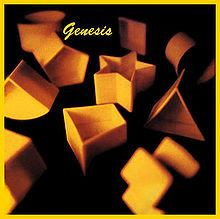
An interesting thing about Genesis is that while I think most of their albums are very good and even the few that don’t particularly appeal to me have their enjoyable aspects, the group doesn’t have any single album that has the brilliance of albums like Queen’s A Night at the Opera, Radiohead's OK Computer, Randy Newman’s Sail Away, Bob Dylan's Highway 61 Revisited or the best three or four Beatles albums. Most of their albums have a lot of strong points and a few weak ones, making for a fairly consistent level of quality that makes it difficult to single out any single album as the best, a task made more difficult by the fairly dramatic difference between their earlier and later material, albeit a difference that evolved gradually. Nevertheless, if I had to pick a favorite, the eponymous 1983 album Genesis (also referred to as "Shapes" because of the cover image or the "Mama" album because of the opening track) would be a strong contender, along with a few of their earlier albums.
Despite progressive elements in a few songs, Genesis was the group’s most pop album yet, but this was not necessarily a bad thing, as it was very good and highly distinctive pop. With only one or two exceptions, the songs were great, and the material was highly varied, which is something I always appreciate in an album. Mike Rutherford’s guitar and bass playing created a solid foundation for the excellent keyboard sounds of Tony Banks. Phil Collins of course was excellent on the drums, even if he didn’t do as much virtuoso playing as on the group’s 1970s albums, and his vocals on this album was among the best he did with the band. While many of the band’s songs were written individually in the 1970s, with Banks and to a slightly lesser extent Rutherford dominating the songwriting (though former members Steve Hackett and especially Peter Gabriel had also written a lot), on Genesis the band wrote all the songs together in the studio, completing an evolution toward group compositions that had been apparent on their previous two albums (the one before Genesis, 1981’s Abacab, had only three individually written songs – one from each member of the group). With the three of them writing the music together (the lyrics were split among the three with each doing several songs) and all contributing more or less equally, the results were rather different from their earlier work, but just as satisfying in its way.
Genesis Song by Song
Mama: The opening track has to be one of the most unusual sounding songs Genesis ever recorded. An odd drum machine rhythm created by Mike Rutherford, strange keyboard sounds from Tony Banks, and powerful but slightly creepy vocals from Phil Collins (including a sinister laugh) combine to make one of the most original songs the group did. The lyrics, written by Collins, are about a young man in love with a prostitute some years older than himself. The song was a big hit in the UK but was too weird to get airplay in the US. While subjectively speaking there are a couple of tracks on the album I enjoy more, this one may be the most creative.
That’s All: A very melodic, slightly Beatlesque song that was Genesis's first top 10 hit in the US, this was as far as I can recall the first Genesis song I heard, and it stood out even in those days when I didn't really listen to music. Banks's keyboards are central to the song, and Rutherford plays some nice acoustic guitar at the end. Phil Collins, who wrote the lyrics, contributes an excellent vocal performance. This is still one of my favorite Genesis songs.
Home by the Sea: This is another favorite of mine. The music, dominated by Banks's keyboards but with Rutherford's guitar forming the backbone, is great, and the lyrics, about a burglar who breaks into a haunted house, much to his regret, are among Banks's best. This song segues into "Second Home by the Sea", and together they form a ten-minute song that is the most "prog" one on the album.
Second Home by the Sea: This is mostly an instrumental with Rutherford's guitar, Collins's drums and especially Banks's keyboard building constantly to a climax at the end in which Collins reprises a verse of "Home by the Sea", bringing the first half of the album to a strong conclusion.
Illegal Alien: This is the album's weakest track. Some people find the lyrics (which I had thought were by Collins, but were attributed by Banks to Rutherford in a contemporary interview I came across the other day) and Collins's fake accent to be condescending and even racist. I don't think this is really the case, as the song is intended to be tongue in cheek and is actually sympathetic to undocumented immigrants. But though it has good music and even a few good lines in the lyrics, it doesn't work very well overall, and despite the band's good intentions, it makes for slightly uncomfortable listening (and viewing, in the case of the video).
Taking It All Too Hard: This is a pleasant but not exceptional ballad in which Rutherford's guitar takes center stage. Both musically and lyrically (Rutherford was also responsible for the lyrics) it is something of a precursor to the band's hit "Throwing It All Away" from their next album.
Just a Job to Do: This is the hardest driving song on the album, and features some powerful guitar and bass by Rutherford and excellent drumming and vocals by Collins, with Banks adding color on top. The lyrics, written by Rutherford, are about an assassin or bounty hunter in pursuit of his prey. All these elements combine to make an excellent album track.
Silver Rainbow: This is probably my favorite song on the second half of the album. It is dominated by Banks's keyboards which create a surreal, slightly psychedelic atmosphere which fit well with the strange imagery in Banks's lyrics, which are actually about how people in the middle of making out can become completely oblivious to the world around them.
It’s Gonna Get Better: This mid-tempo ballad features a good melody and great vocals by Collins. The lyrics are about holding on to hope in difficult situations and so are ultimately optimistic, despite a slightly dark edge. A good if not brilliant track, it brings the album to a satisfying close.
Tuesday, April 30, 2013
Working Class Heroes: A Beatles Album from 1971
Almost a year ago, I published a post on my attempts to assemble Beatles albums for the 1970s. As noted there, I started the project several years ago and put together several albums, though only one is covered in the post. In fact I put together a total of six albums, covering 1970 to early 1975, with a tentative track listing for a seventh. One reason I haven't posted the others here yet is I am considering redoing some of them. For example, I would like to switch a pair of tracks from the second and third albums, putting "I Found Out" on the second one and "It's So Hard" on the third. On some of the later ones I may reconsider one or two choices here and there, and I'd also like to do more albums, perhaps taking some of the suggestions in Jeff Walker's book on the same theme into consideration, though I still prefer my format to his. But I haven't gotten around to any of those things yet, so for now I'm just posting the original version of the second album (titled Working Class Heroes) and the accompanying liner notes.
Working Class Heroes
01 Working Class Hero (Lennon) 3:50
02 Uncle Albert/Admiral Halsey (McCartney/McCartney) 4:48
03 Wah-Wah (Harrison) 5:35
04 Mother (Lennon) 3:55
05 Too Many People (McCartney) 4:09
06 It's So Hard (Lennon) 2:29
07 Beware Of Darkness (Harrison) 3:48
08 Heart Of The Country (McCartney/McCartney) 2:23
09 Love (Lennon) 3:24
10 Not Guilty (Harrison) 3:22
11 Early 1970 (Starkey) 2:20
12 Power To The People (Lennon) 3:19
13 The Back Seat Of My Car (McCartney) 4:27
Total Time - 47:49/47:38
Working Class Hero
Written and Performed by John Lennon
Drums: Ringo Starr
Recorded 1970/09-10; Released 1970/12/11
From Plastic Ono Band
Uncle Albert/Admiral Halsey
Written and Performed by Paul and Linda McCartney
Recorded 1971/01-03; Released 1971/05/17
From Ram
Wah-Wah
Written and Performed by George Harrison
Drums (on about half of the album, no details available): Ringo Starr
Recorded Mid 1970; Released 1970/11/27
From All Things Must Pass
Mother
Written and Performed by John Lennon
Drums: Ringo Starr
Recorded 1970/09-10; Released 1970/12/11
From Plastic Ono Band
Too Many People
Written by Paul McCartney; Performed by Paul and Linda McCartney
Recorded 1971/01-03; Released 1971/05/17
From Ram
It's So Hard
Written and Performed by John Lennon
Recorded 1971/06-07; Released 1971/09/09
From Imagine
Beware Of Darkness
Written and Performed by George Harrison
Drums (on about half of the album, no details available): Ringo Starr
Recorded Mid 1970; Released 1970/11/27
From All Things Must Pass
Heart Of The Country
Written and Performed by Paul and Linda McCartney
Recorded 1971/01-03; Released 1971/05/17
From Ram
Love
Written and Performed by John Lennon
Drums: Ringo Starr
Recorded 1970/09-10; Released 1970/12/11
From Plastic Ono Band
Not Guilty
Written by George Harrison; Performed by the Beatles
Guitar and Vocals: George Harrison
Guitar: John Lennon
Bass: Paul McCartney
Drums: Ringo Starr
Recorded 1968/08/08-12
From Anthology 3
Early 1970
Written and Performed by Richard Starkey (Ringo Starr)
Recorded 1970/06/30-07/01; Released 1971/04/09
Guitar and Piano: George Harrison
Single (B-side of "It Don't Come Easy")
Power To The People
Written and Performed by John Lennon
Recorded 1971/01/22; Released 1971/03/08
Single
The Back Seat Of My Car
Written by Paul McCartney; Performed by Paul and Linda McCartney
Recorded 1971/01-03; Released 1971/05/17
From Ram
Working Class Heroes is my effort at putting together a Beatles album for fall of 1971. The general principles I was going by were the same for this album as for the previous one, What Is Life. Again there was actually a wealth of material to choose from, so the hardest part was deciding what songs to leave off.
Most of John's songs come off of his first proper solo album (ignoring the experimental albums he did with Yoko) Plastic Ono Band. This is one of the most personal, soul-bearing albums ever put out by a singer-songwriter, and is worth hearing in its entirety. However, with the three songs appearing here, together with "God" on What Is Life, you get some of the strongest tracks from the album. "Working Class Hero", though at the time it probably got more attention for one particular lyric than anything else, is a powerful tribute to the laboring class. "Mother" (which here is not the album version but the slightly shorter edit that appeared as a single [actually the YouTube video which I have linked to is the album version]) is perhaps John's most personal song. "Love" is a simple song in the same thematic vein as his "All You Need Is Love". Also appearing here is "It's So Hard" from John's following album Imagine, and "Power To The People", which appeared as a single between Plastic Ono Band and Imagine (it now appears on the Plastic Ono Band CD). George Martin once said it was a not-so-great rehash of "Give Peace A Chance", but while I can see his point, I think it's not too bad, and as it's also one of John's better-known solo tracks, I decided to include it.
Paul's songs "Uncle Albert/Admiral Halsey", "Too Many People", "Heart Of The Country" and "The Back Seat Of My Car" are all from his album Ram, which is now regarded as one of his better solo efforts. The album is officially a Paul and Linda album, and Linda got co-writing credits on some of the songs, though her contribution was probably fairly minimal. "Uncle Albert" is one of Paul's better solo tracks, and was also his first US solo number one (and the second solo Beatle number one, after George's "My Sweet Lord"). Even John liked parts of it, though not the whole song. "Too Many People" and "The Back Seat Of My Car" are also standout tracks; both are great melodic pop, though the former angered John, who thought it was directed at him -- and Paul did admit later that one line was about John and Yoko "preaching practices" (John of course replied on Imagine with a far more blatant attack on Paul entitled "How Do You Sleep"). "Heart Of The Country" is a more simple tune, similar to many of the songs on his previous album, McCartney.
For the first two of George's contributions on Working Class Heroes, I continued to mine his brilliant (and long) All Things Must Pass. "Wah-Wah" is a loud rocker written at the time of the Get Back sessions (supposedly inspired in part by an argument with John and the various tensions in the group that led him to quit temporarily). "Beware Of Darkness" is another one of the excellent album tracks from All Things Must Pass. George's third contribution, on the other hand, is a genuine Beatles recording with all four Beatles present. This song, "Not Guilty", was originally slated for The Beatles (The White Album), and the Beatles did over a hundred takes of it (including false starts) but ended up leaving it off the album (this version is from the third Beatles Anthology). Interestingly, the song is a riposte to various criticisms George had been receiving at the time from the other Beatles.
Ringo's contribution, "Early 1970", is the B-side from his hit single "It Don't Come Easy" (which appeared on What Is Life). It's a simple yet entertaining tune which gives the easy-going Ringo's take on the Beatles' situation in, as the title says, early 1970.
Once again, if the Beatles had really stayed together their 1971 album might have been quite different from this (at least "Too Many People" would presumably have had slightly different lyrics). But like What Is Life, Working Class Heroes is a solid set of songs which shows that the Beatles still had what it takes to make great music, even if they no longer did it together.
Wednesday, April 17, 2013
Topical Music: Songs about Current Issues
Since this post touches on both music and current affairs, I'm cross-posting it both here and in my other blog.
While many – perhaps even most – rock and pop songs deal with topics like personal relationships, there are also quite a few that are about issues relating to politics and society. Several recent news topics reminded me of a few of these songs.
The recent death of Margaret Thatcher inevitably made me and many other people think of the Elvis Costello song “Tramp the Dirt Down”. In this song, Costello declared that he looked forward to Thatcher's death so that he could stand on her grave and as the title says, tramp the dirt down. A pretty vicious song, but considering Thatcher’s friendship with the murderous Chilean dictator Auguste Pinochet, her opposition to putting pressure on South Africa to end apartheid, and many of her policies in Britain, it’s easy to understand Costello’s attitude. I just wonder if he’ll follow through.
A major news topic from the United States is the debate over gun control. While I’ve covered this issue in more detail elsewhere (both seriously and ironically), there are several songs which to a certain degree express some of my own thinking on guns. One is Queen’s “Put Out the Fire”, from their 1981 album Hot Space. One of my favorite parts is the verse where Brian May, the writer of the song, turns an old pro-gun cliché on its head: “You know a gun never killed nobody/You can ask anyone/People get shot by people/People with guns”. Tracy Chapman talks about inner city youth with guns in her excellent song “Bang Bang Bang”. And of course there’s the Lynyrd Skynyrd song “Saturday Night Special”, about the gun of the same name that “Ain't no good for nothin' / But put a man six feet in a hole”. Somewhat more indirectly related to the debate is Sting’s song “I Hung My Head” (also covered by Johnny Cash), about a man who accidentally shoots someone – something that happens with appalling frequency in the US – and is hung for it. Incidentally, it has occurred to me that the main reason George Harrison survived his encounter with a homicidally insane "fan" and John Lennon did not is George lived in the UK, where it isn't nearly as easy to get a gun.
The environment is always an issue, and there are numerous songs about it as well. One that came to mind recently was Joni Mitchell’s classic “Big Yellow Taxi” (“They paved paradise and put up a parking lot”). It seemed particularly applicable to a controversy at a local school in Taiwan, over the opposition of environmental groups and many students and faculty, the administration pushed through a ridiculous plan to cut down a bunch of old-growth trees in order to build a swimming pool and, you guessed it, a parking lot, or rather a parking garage (not to serve the students – this is a junior high school – or even the faculty, but to make money for the school…because, after all, the main purpose of a public school is to bring in money, right?). I also heard an interesting song dealing with climate change called “Disappearing”. It’s by a musician from Vancouver named Simon Collins (who just happens to be the son of a certain famous British drummer and singer).
Then there was the election of a new Pope, one who despite displaying a refreshing approach still looks like he may be disappointing on some issues. If there’s one song I think of when I think of the Catholic Church, it’s “The Vatican Rag” by the inimitable Tom Lehrer. It may be almost 50 years old, but like so many of Lehrer’s songs, it’s timeless. It was even covered by the great Marty Feldman, best known for his role in Young Frankenstein.
Sunday, March 31, 2013
Ara Kimbo (Hu Defu 胡德夫)
I've been too busy on various things (including further work on my eternally unfinished Taiwanese pop music history research) to write anything new, so here's a link to an old article of mine about Taiwanese aboriginal musician Ara Kimbo (Hu Defu 胡德夫) on the Taiwan Culture Portal.
Subscribe to:
Posts (Atom)
